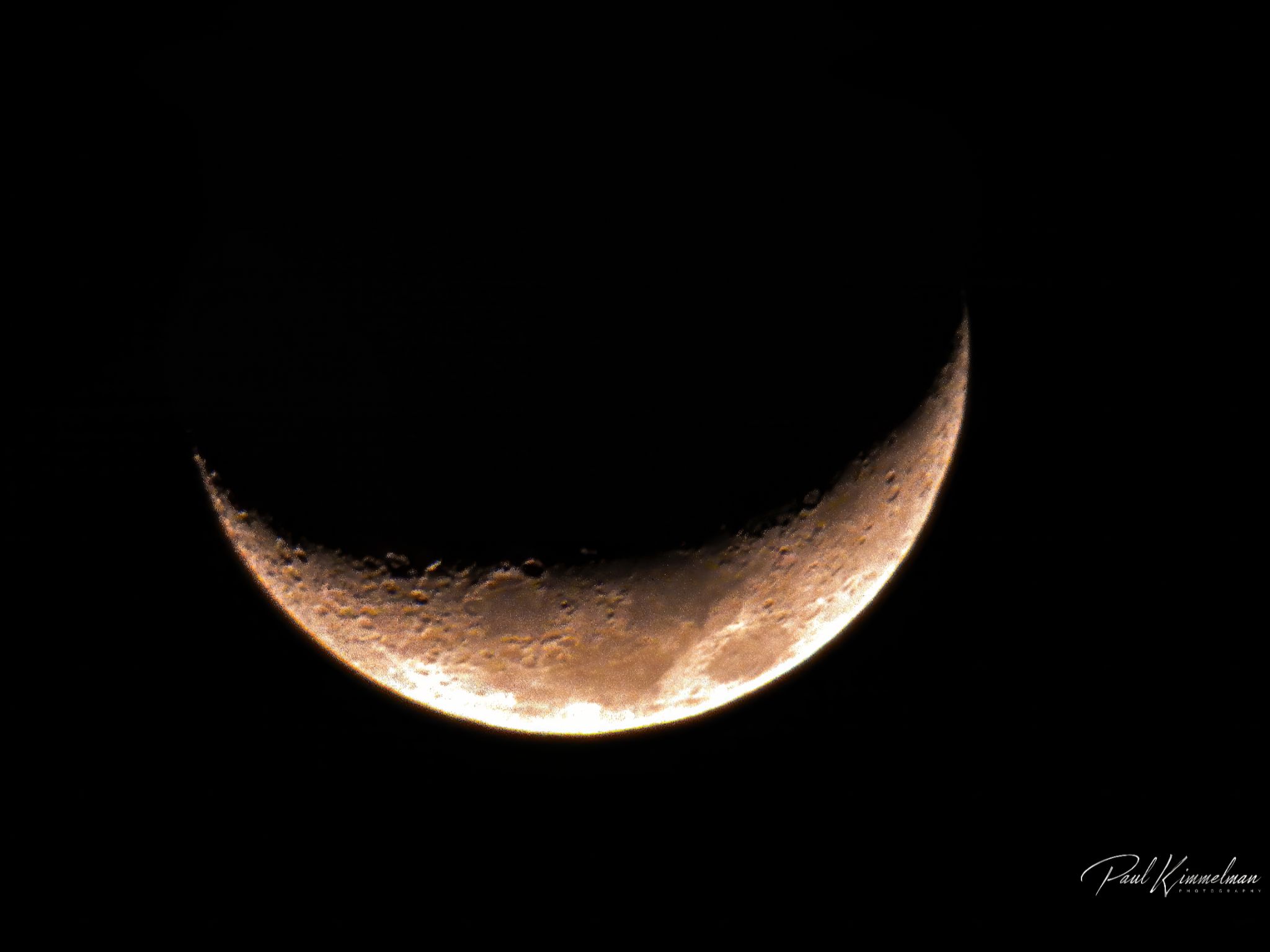
By Paul Kimmelman | 2025-12-24
Order by: Trending (past 30 days)Date
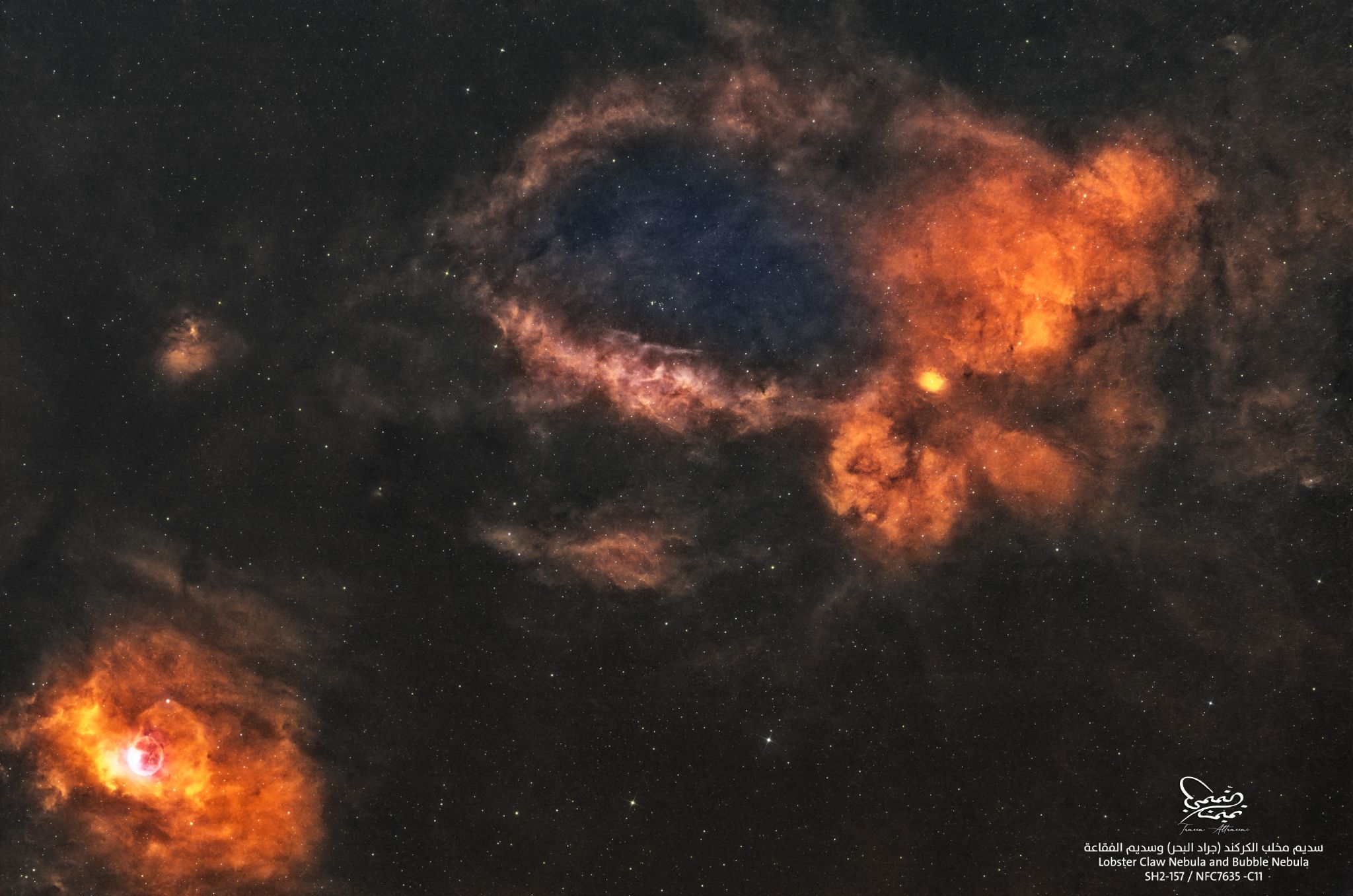
The Lobster Claw Nebula and the Bubble Nebula
On 12/20/2025 01:00 am by Tameem Altameemi | Website | United Arab Emirates
The Lobster Claw Nebula (Sh2-157) and the Bubble Nebula (NGC 7635) share the same rich region of the Milky Way within the constellation Cassiopeia, yet each tells a different story of stellar influence and cosmic shaping.
Sh2-157 is commonly known as the Lobster Claw Nebula due to its curved, claw-like appearance formed by glowing hydrogen gas. These structures are shaped by intense radiation and stellar winds from nearby young, massive stars. The nebula was cataloged in 1959 by (Stewart Sharpless) as part of his famous Sharpless catalog of H II regions, which focused on mapping large areas of ionized hydrogen across the Milky Way.
Just below it lies the Bubble Nebula (NGC 7635), named for its nearly spherical shell that resembles a cosmic bubble suspended in space. This structure is created by powerful stellar winds from a hot, massive central star pushing outward into the surrounding interstellar medium. The Bubble Nebula was discovered in 1787 by (William Herschel), whose observations laid much of the foundation for modern deep-sky astronomy.
Captured in narrowband hydrogen-alpha (Hα) and oxygen-III (OIII), this image highlights both nebulae as examples of how massive stars actively shape their environments. While their names are inspired by familiar earthly forms, their true significance lies in revealing the dynamic processes of star formation and stellar feedback within our galaxy.
This image was captured from the skies of the United Arab Emirates using a Sky-Watcher Evostar 72ED APO refractor, with a total integration time of 2 hours and 48 minutes.
Telescope: Sky-Watcher Evostar 72ED APO Refractor
Mount: iOptron HAE43
Camera: ZWO ASI183MM Pro (cooled, monochrome)
Filters:
Hydrogen-alpha (Hα)
Oxygen-III (OIII)
Guiding:
Svbony Mini Guide Scope 30mm
ZWO ASI120MM guide camera
Capture Software: ASIAir Plus
Processing Software: PixInsight, Photoshop
Exposure Details:
Hα: 29 × 180s (1h 27m)
OIII: 27 × 180s (1h 21m)
Total Integration: 2h 48m
