By Lynzie Flynn | 2024-04-16
Order by: Trending (past 30 days)Date
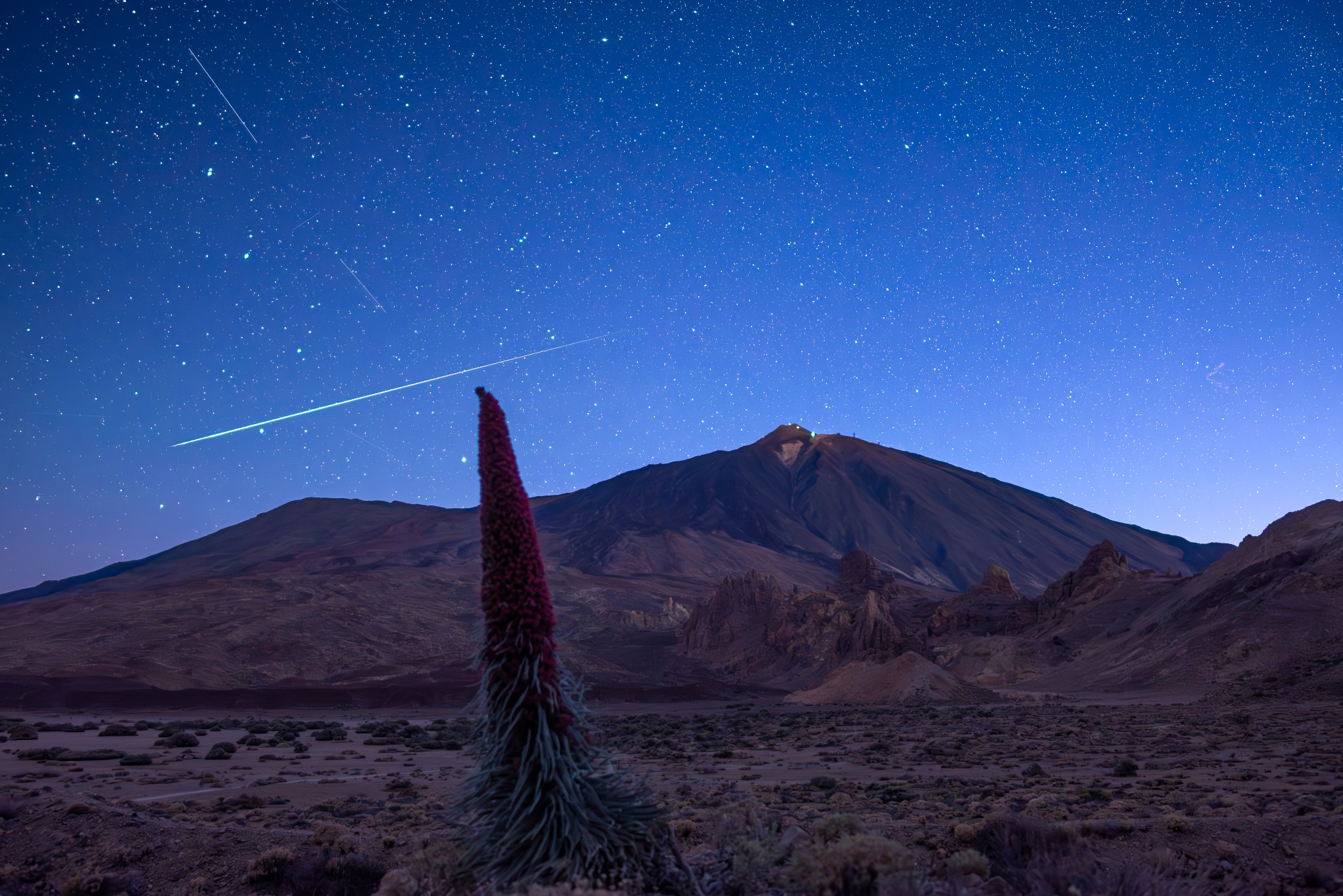
eta aquariid over Teide and tajinaste
On 05/06/2024 05:30 am by roberto porto | teide natonal park, Tenerife, Canay islands, Spain
Shortly before dawn an eta-aquarid, a grain of dust left by Halley's Comet in its orbit around planet Earth, enters the atmosphere above the peak of Teide, the highest volcano in Spain, located in the Canary Islands, a very favorable place to observe this spring meteor shower. The meteors of the eta-aquarids are very fast, green or yellowish in color and leave long trails in the sky. In the foreground, a tajinaste (echium wildpretii), an endemic plant that only grows on the summits of some Canary Islands and blooms in the month of May. The tajinastes can reach up to 3 meters in height but this year, the lack of snow (for the first time in 108 years it has not snowed this winter on the Teide peak) and the terrible forest fire that devastated the island last summer, make That this spring there will be few and small tajinastes. At the top of the Teide peak, the lights of the hikers who climb on foot at night. 3718 meters of altitude of Teide to see the sunrise from the highest point. Other traces perpendicular to the fireball are also observed in the image; They are artificial satellites that are increasingly common in the night sky.
Sometimes it is not easy to differentiate a meteor from a satellite trace in a photograph. In this case, the eta-aquarids have very long lines and a striking green color. Furthermore, this case left a persistent trail that can be observed in up to 15 photographs of 15 seconds each after the meteor explosion, that is, 225 seconds later.
a single raw,
Nikon Z5 camera, Samyang 24 mm f:1.4 iso 1600 15 second exposure
IA noise reduction with adobe lightroom, cropped and color , brigthness and contrast adjusted