By Anthony Faulkner | 2026-11-08
Order by: Trending (past 30 days)Date
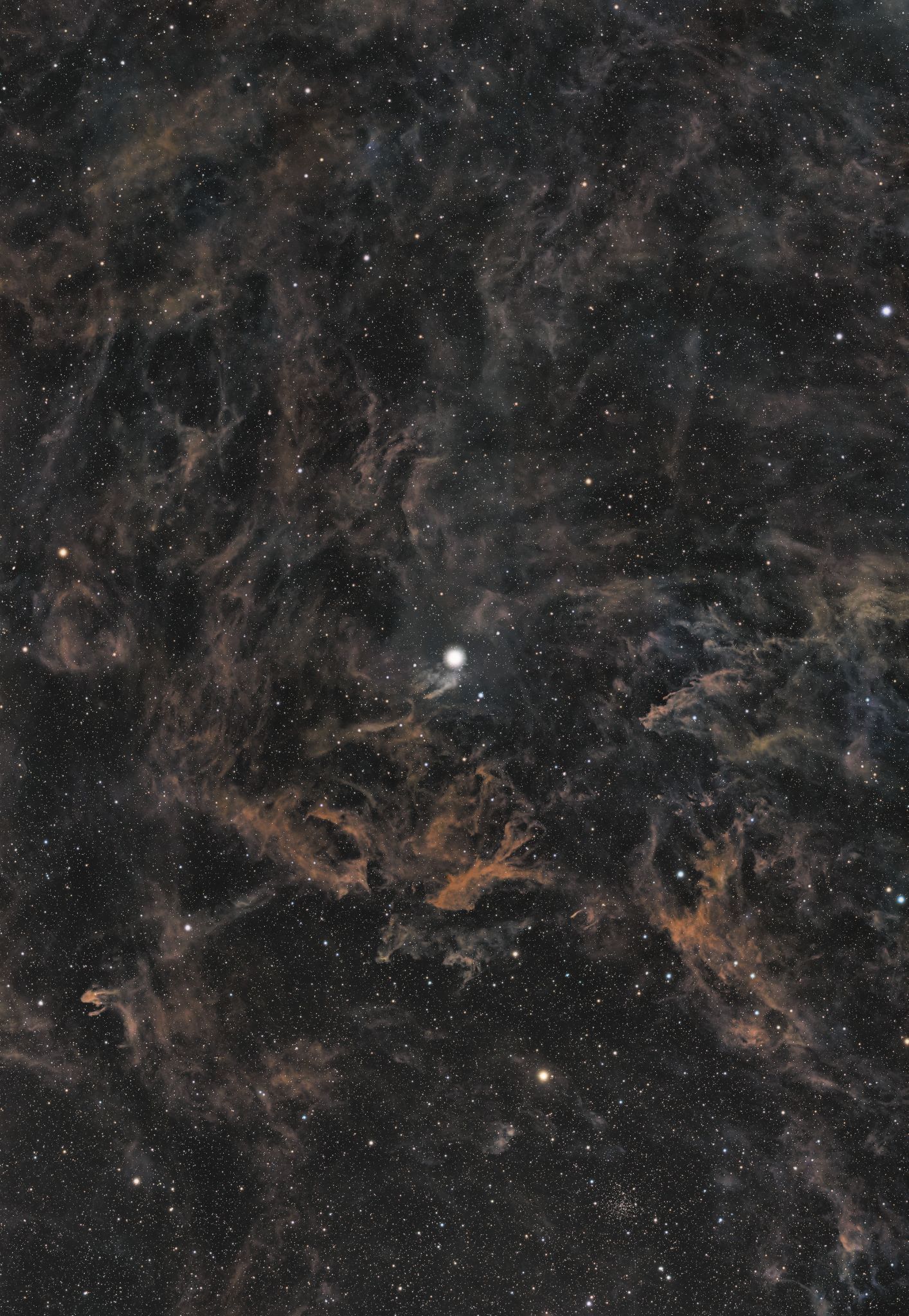
Polaris, our North Star, and surrounding Integrated Flux Nebula (IFN)
On 11/08/2026 11:30 pm by Steven Bellavia | Website | Smithfield, VA
Polaris with surrounding Integrated Flux Nebula (IFN), again, but this time in color!
Polaris is dead center and on the lower right, you can see the open cluster NGC 188, or the "Polarissima cluster", and LBN 628 in Cepheus on the lower left, as well as SH2-178.
Also in the image: LBN 606, 617,628, 631 and 632, NGC 188, NGC 1544 and SH2-178,
The Integrated Flux Nebula (IFN) near Polaris, often called the "Polaris Flare", is estimated to be roughly 500 light-years away from Earth. This faint cosmic dust is located above the Milky Way's disk. Because it lies relatively close to the edge of our galaxy, it is illuminated not by a single star, but by the combined glow of hundreds of billions of stars in the Milky Way.
Note that Polaris is estimated at about 450 light years distant, not far at all from the IFN in the same view.
SvBony SV535 105mm focal length lens
ZWO ASI 294MM Pro camera
SkyWatcher EQ6R-Pro equatorial mount
- 183 x 90 seconds, Baader CMOS-optimized Red in BIN2 mode, Nov 03,2026
- 206 x 90 seconds, Baader CMOS-optimized Green in BIN2 mode, Nov 08, 2026
- 194 x 90 seconds, Baader CMOS-optimized Blue in BIN2 mode, Nov 07, 2026
For a total of 14 hours, 34 minutes integration
30 Dark frames, with 25 flats, 25 dark-flats with each filter for image calibration
calibrated, registered, integrated and processed in PixInsight