By Tiago Ferreira | 2026-09-11
Order by: Trending (past 30 days)Date
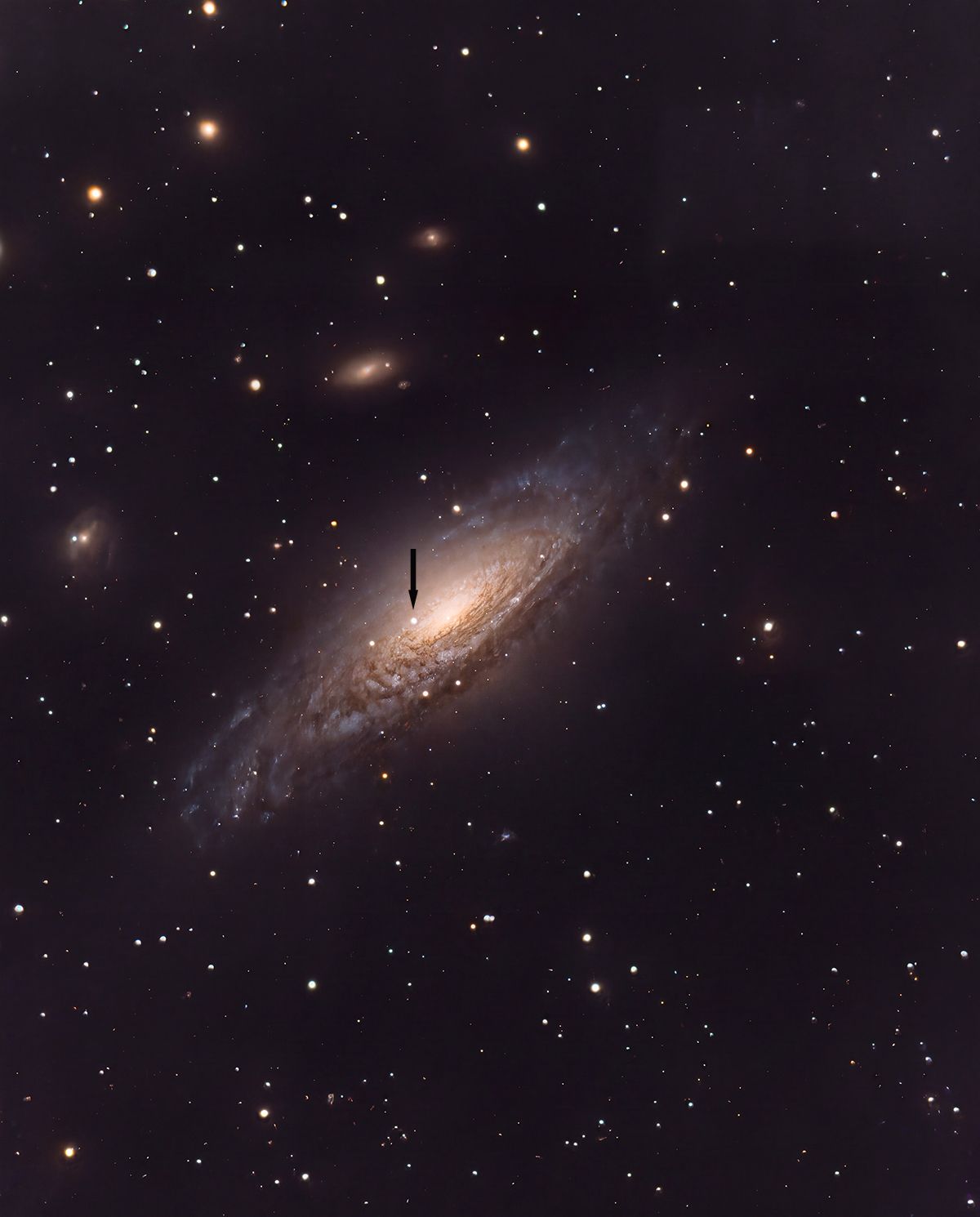
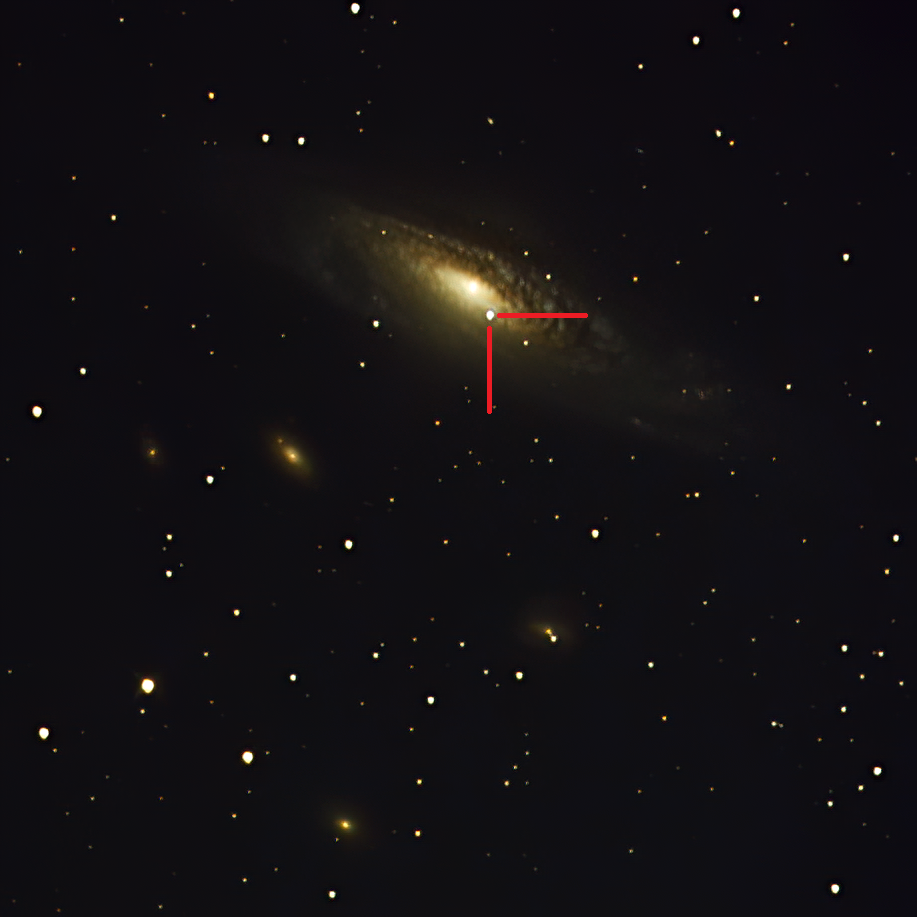
Galaxy NGC7331 and supernova
On 09/10/2026 03:20 am by Dominique Gering | Website | Belgium
Here is a galaxy that closely resembles our own (the Milky Way) in both shape and size. Located in the constellation Pegasus, NGC 7331 (its nickname) exhibits different activity; specifically, supernovae explosions occur there more frequently than in our own galaxy.
A supernova marks the end of a star more massive than our Sun. In this particular case, it is the thermonuclear explosion of a white dwarf that is accreting material stripped from a neighboring star.
The bright star (named SN 2026aaiv) visible near the core appeared suddenly on September 1st. It will shine for a few weeks or months before "fading out."
Supernova explosions were also observed there last year, as well as in 2014, 2013, and 1959.
The galaxy lies approximately 45 million light-years away from us.
In other words, the photo shows you a supernova that exploded 45 million years ago—a time when, on Earth, the mammals destined to eventually give rise to humans were merely a tiny branch in the history of life, when there was no permanent ice in Antarctica, and when the ancestors of horses were the size of dogs. And throughout those 45 million years, this light traveled through space while, back on Earth, the Eocene epoch came to an end, continents continued their drift, the Alps and Himalayas rose, climates shifted, and non-avian dinosaurs (those not belonging to the bird lineage) had already been extinct for over 20 million years... and finally, *Homo sapiens* appeared only during the very last fractions of that journey...
Technical details:
The blurry "patches" visible to the left and above the main image are also galaxies. This grouping is known in English as the "Deer Lick Group".
The image was captured on the night of September 9–10 using a telescope with a 280mm aperture and an f/10 focal ratio (2800mm focal length).
It consists of 47 exposures of 120 seconds each, taken under a very clear sky—though it was cold (barely 5°C).
Celestron 11 at F/D:10
Camera zwo asi 1600 mc pro
Mount EQ6 R Pro
DeepSkyStacker, RC Astro