By Mark Wralstad | 2026-03-01
Order by: Trending (past 30 days)Date
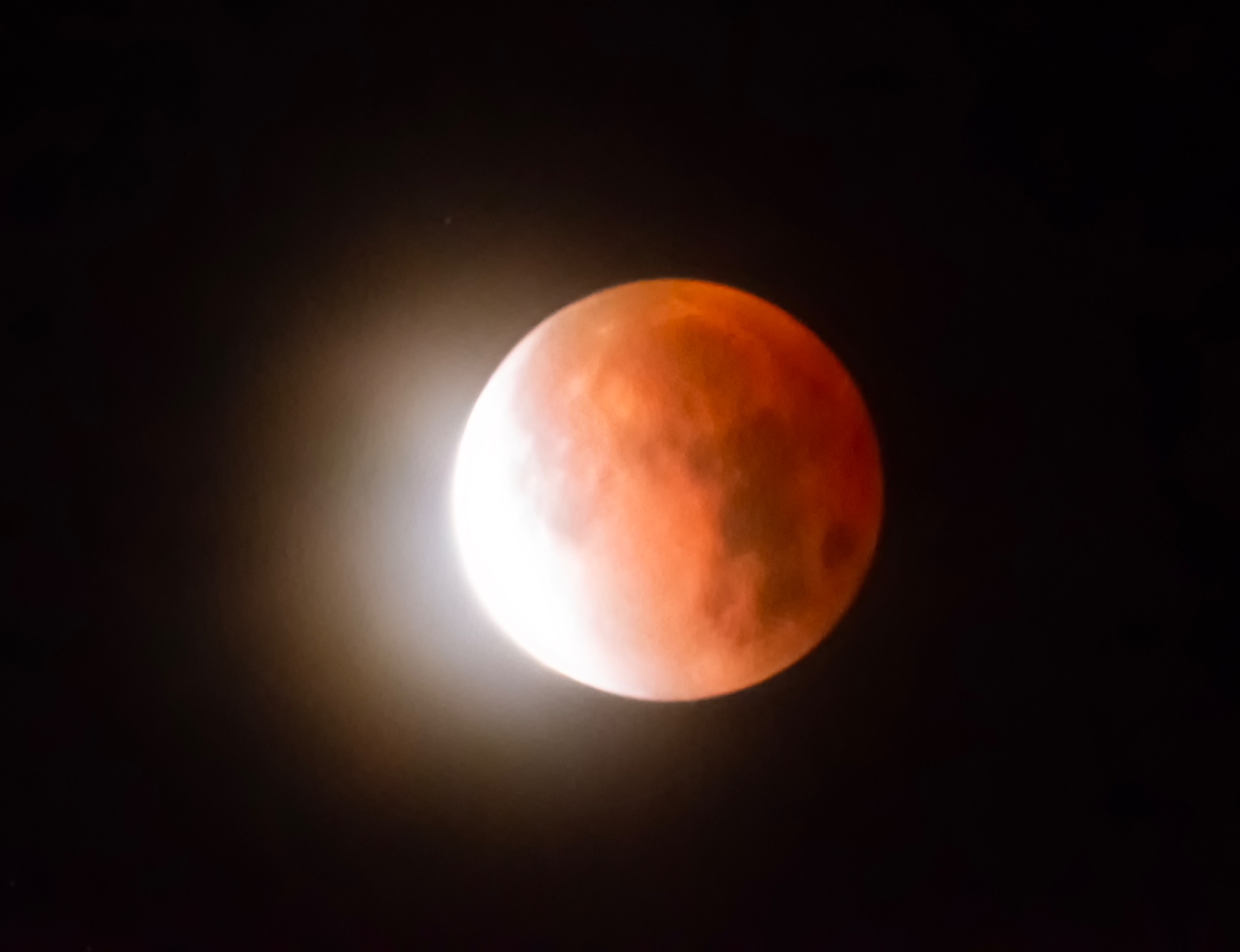
Retreating Umbral Shadow
On 03/03/2026 05:11 am by Jelieta Walinski Ph.D | Website | Montezuma Pass, Coronado National Memorial, AZ, USA
From the rugged heights of Montezuma Pass, beneath a canvas of vast Arizona sky, the Full Moon awakens on March 3, 2026. The Earth's deep shadow, the umbra, releases its hold, a cosmic curtain drawing back. Slowly, deliberately, the Moon regains its silver sheen, shedding the ruddy glow of its eclipse.
This emergence is a silent testament to grand celestial mechanics. Our planet, momentarily positioned directly between the Sun and Moon, cast its complete shadow, briefly cloaking the lunar sphere. The umbra, that darkest core of our shadow, engulfed the Moon. Now, as the Moon orbits onward, it drifts from this profound obscuration, re-illuminated by the Sun's direct light. Each fraction of an arc-second reveals more of its familiar surface, a luminous pearl escaping the cosmic gloom.
At this very vantage, Montezuma Pass, history whispers across the ancient winds. For countless generations, the Indigenous peoples of this land looked upon these same skies, their understanding of the cosmos deeply intertwined with their existence. This pass, a natural gateway and lookout, was more than just a route; it was a place where earth and sky met, where ancestral journeys unfolded, and where the movements of sun, moon, and stars were read as sacred narratives. While the precise details of lunar eclipse interpretations are unique to each nation, the reverence for such profound celestial events from such a significant place binds us to a timeless human wonder, connecting present observation with an ancient, unbroken gaze.
Canon EOS 1-DX, BEGH2C Carbon Fiber Head, GIT203 Grand Series2 Stealth Carbon Fiber Tripod, Canon EF 800mm f/5.6L IS USM Lens, Canon Timer Remote Controller TC-80N3
In Photoshop