By Mark Wralstad | 2026-01-12
Order by: Trending (past 30 days)Date
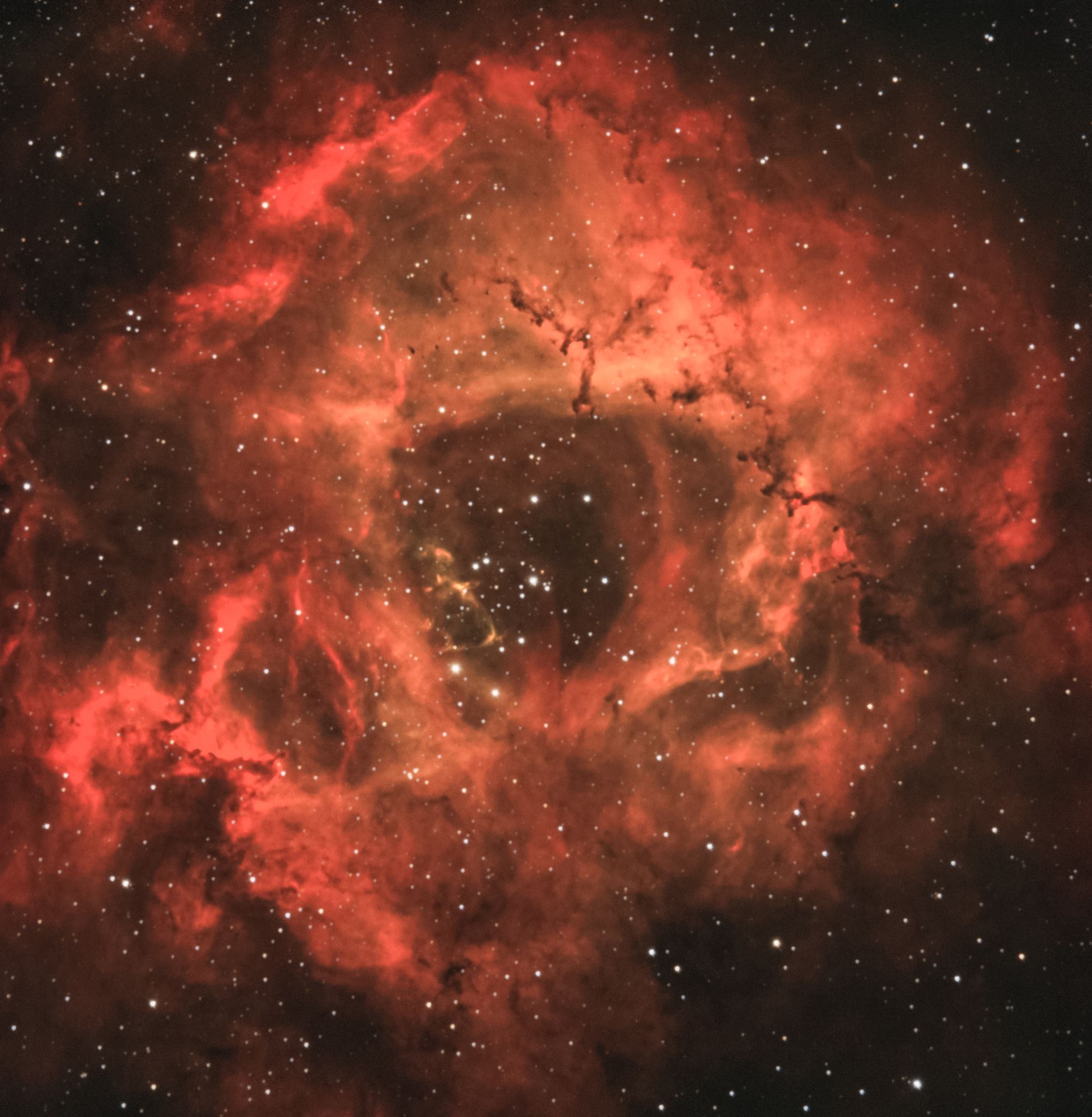
The Skull Nebula (Rosette Nebula) in Monoceros
On 01/09/2026 10:30 pm by AQUIB ALI ANSARI | Website | JAIPUR, RAJASTHAN, INDIA
This image shows the Rosette Nebula, also known as the Skull Nebula, a vast ionized hydrogen (H II) region in the constellation Monoceros. Shaped by intense ultraviolet radiation and stellar winds from its central star cluster, NGC 2244, the nebula’s glowing gas and dark cavities form a striking hollowed structure resembling a cosmic skull.
The Rosette Nebula lies approximately 5,200 light-years away and spans nearly 130 light-years across. It is an active stellar nursery where young, massive stars are carving and reshaping their parent molecular cloud. The image was captured over multiple nights from my home terrace in Jaipur, India, under heavily light-polluted (Bortle 8) skies.
During the long total exposure of about 17.3 hours, faint meteor streaks were also serendipitously captured in the frame, adding a brief, Earth-bound moment to this distant cosmic scene.
ZWO ASI533MC Pro (cooled one-shot color, 9 MP)
Sigma 150–600mm Contemporary lens set at 500mm (f/6.3)
Optolong L-Ultimate Pro 2″ dual narrowband filter
Sky-Watcher Star Adventurer GTi mount
Guiding with ZWO ASI120MM and SVBONY SV165 (30mm f/4) guide scope
Acquisition and control via ASIAIR Plus
Image calibration and stacking performed in Siril using the standard OSC workflow.
Additional processing included the Siril Veralux Alchemy script for pseudo-SHO color mapping.
Final color balancing, contrast enhancement, and finishing touches were done in GIMP.
