By Huda Falih | 2025-04-12
Order by: Trending (past 30 days)Date
Phases of the Moon from New to Full
On 04/12/2025 11:30 pm by Mandy Daniels | Website | Derbyshire, UK
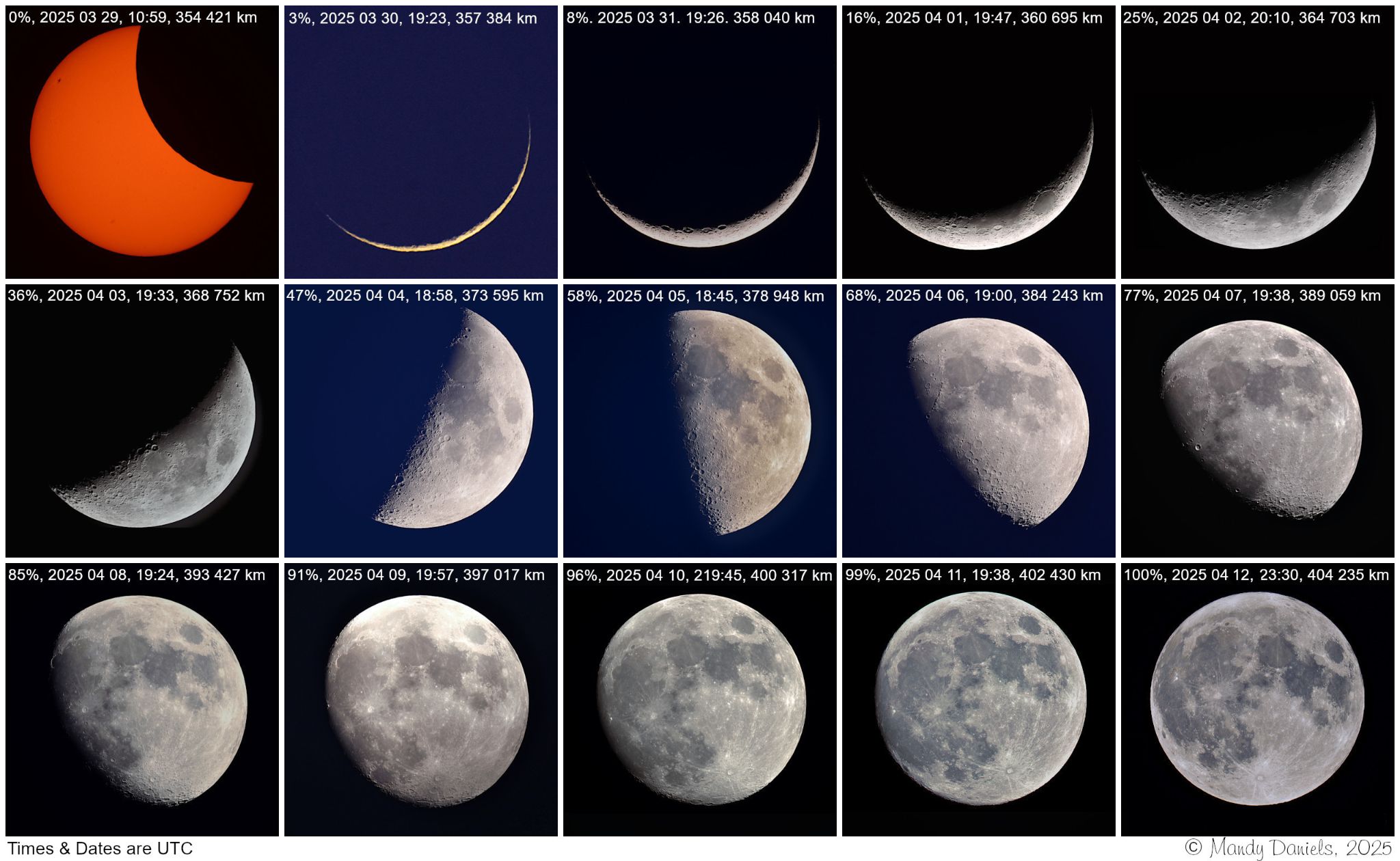
This collage of images of the Moon has been assembled from photographs taken daily over the period 2025 03 29 to 2025 04 12. I decided to include the solar eclipse photo as the Moon is present, even though we only see the outline of a small section of it's perimeter where it bites into the Sun. It, therefore, represents the 0% phase of our Moon and allows a pleasing rectangular aspect ratio for the completed art.
Each image has a unique character as the sunlight passes across the lunar surface, highlighting different features at each phase. Some were photographed in daylight with the Sun still visible, others were photographed long after sunset and in darkness.
The most challenging of all the images to capture was the 3% crescent, as it was very low in the sky after the Sun had set and was photographed through a lot of atmosphere and against a very bright background and in a hazy sky. It is the slimmest crescent I have ever photographed.
The penultimate image in the set, of the 99% Moon is no newcomer to Earthsky having made it's debut on the Community Photos page the day after capture and again in the Earthsky News email on the same day and now appears for the third time!
On each individual image in the set, I have included the illuminated phase percentage, the date & time along with the distance of the Moon from Earth at the time of capture. The distance data is courtesy of Stellarium.
I have been pursuing this idea for nearly ten years and the British weather has thwarted every attempt until now. So, I am pleased to present the final work for all to enjoy.
Nikon D800, Skywatcher 200P for all images except 3% crescent, for which 600 mm lens was used.
GIMP: Create collage of images and add text. For individual image processing, please see the separate images on Earthsky. All times and dates are UTC for consistency.