
By Mike Atkinson | 2025-03-17
Order by: Trending (past 30 days)Date
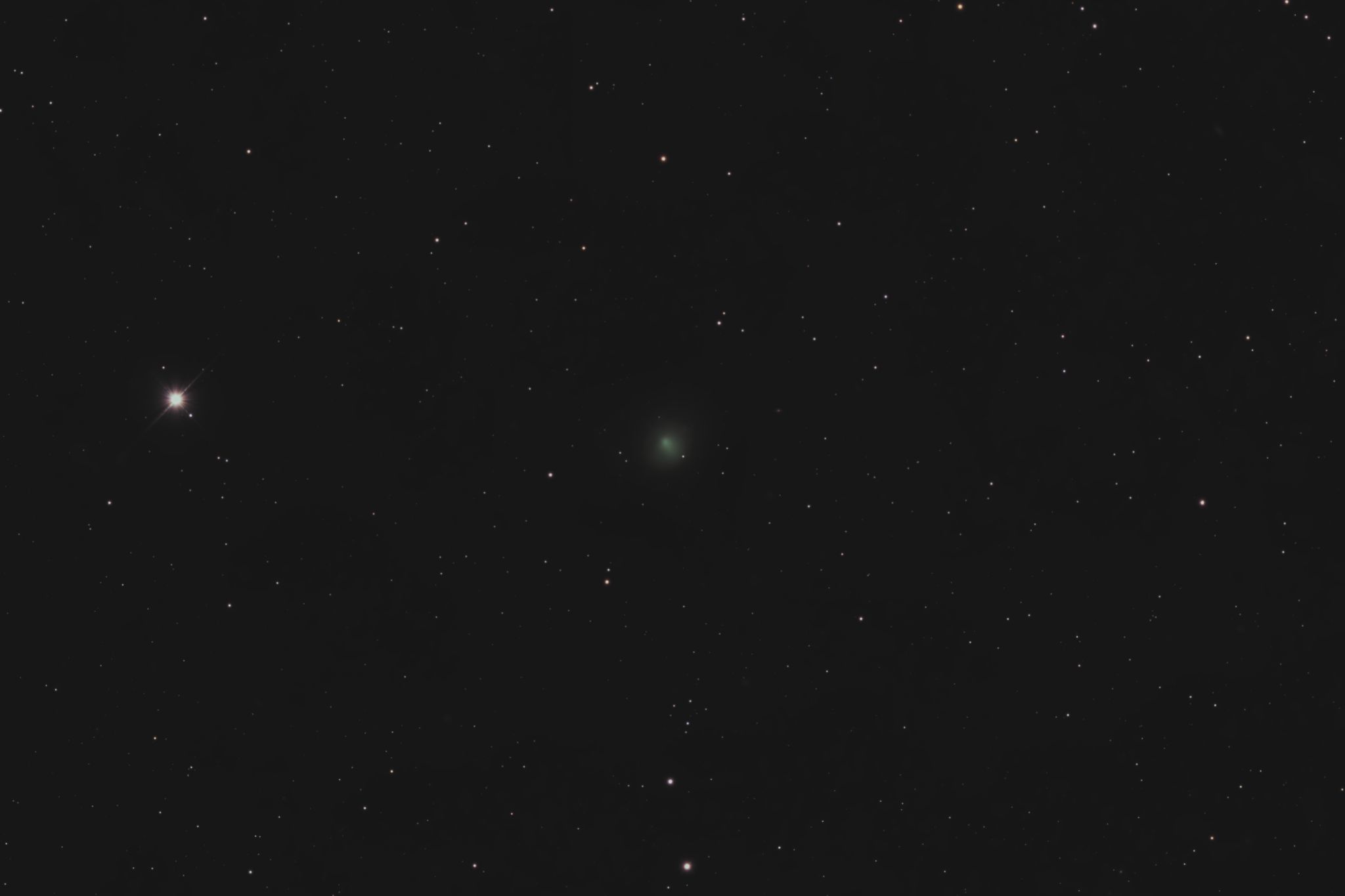
Comet 29P/Schwassmann–Wachmann
On 03/18/2025 09:30 pm by Steven Bellavia | Website | Smithfield, VA
From Wikipedia:
Comet 29P/Schwassmann–Wachmann was discovered on November 15, 1927, by Arnold Schwassmann and Arno Arthur Wachmann at the Hamburg Observatory in Bergedorf, Germany
It has an orbital period of 14.87 years
The comet is unusual in that while normally hovering at around 16th magnitude, it suddenly undergoes an outburst. This causes the comet to brighten by 1 to 5 magnitudes.[10] This happens with a frequency of 7.3 outbursts per year[10] fading within a week or two. The magnitude of the comet has been known to vary from 18th magnitude to 10th magnitude, a more than thousand-fold increase in brightness, during its brightest outbursts.
10. Trigo-Rodríguez; Melendo; García-Hernández; Davidsson; Sánchez (2008). "A continuous follow-up of Centaurs, and dormant comets: looking for cometary activity" (PDF). European Planetary Science Congress. Retrieved October 13, 2008
Celestron C6 SCT
Starizona HyperStar v4
ZWO ASI 533MC
SkyWatcher EQ6R-Pro
IDAS UIBAR-III filter
61 x 120 second exposures
aligned and stacked in PixInsight, with comet alignment, and star removal with stars brought back in, less pronounced to highlight the comet, which is very faint.