By David Hawkes | 2024-03-28
Order by: Trending (past 30 days)Date
On 03/25/2024 10:30 pm by EGIDIO VERGANI | Website | Milano, Italia
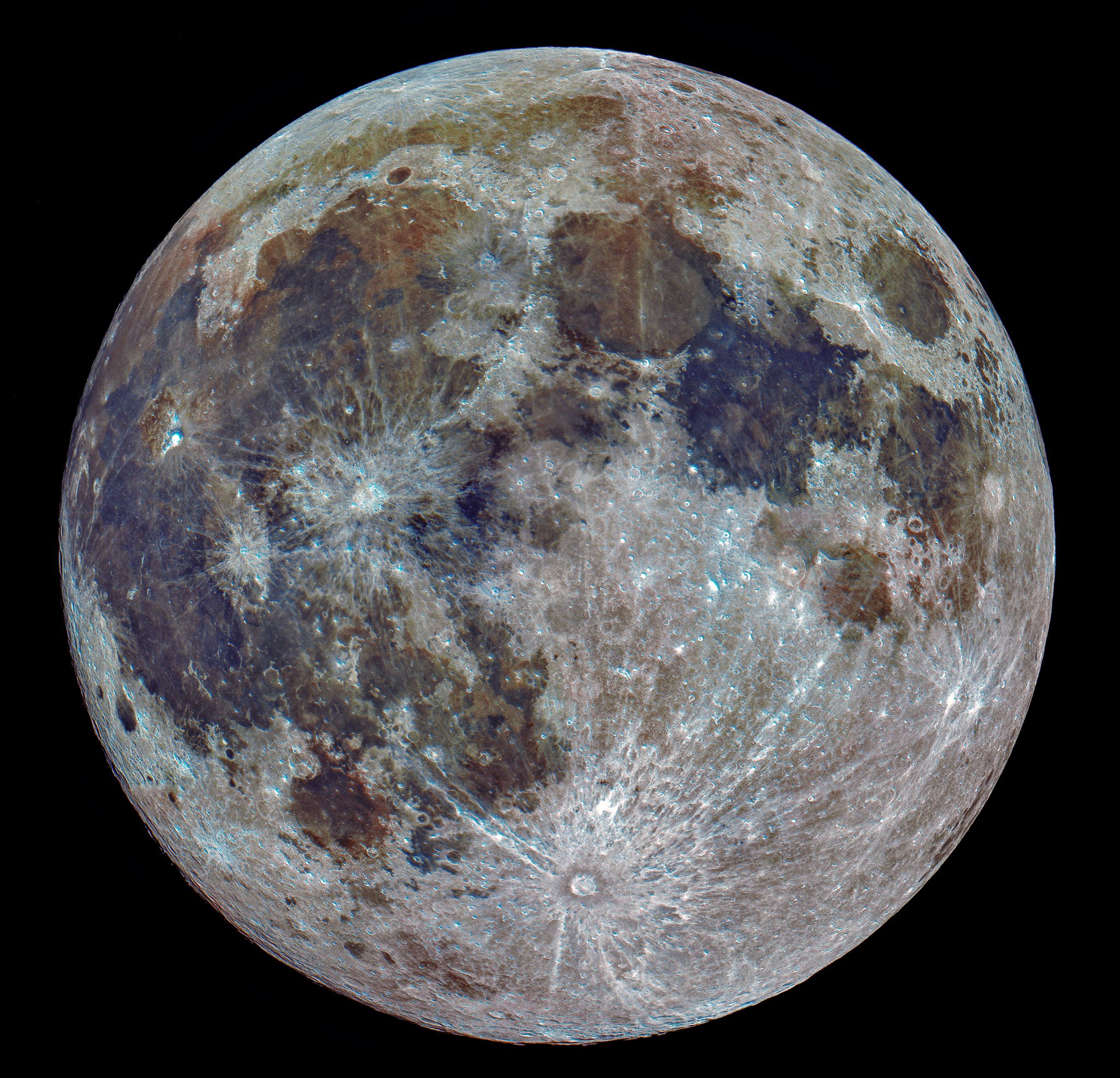
Our eyes see the Moon white but the minerals it is made of have different colours. High altitude areas (plateaus, etc.) with very ancient gabbroic anorthosite rocks with little iron and titanium content: RED color shade.
Altimetrically high areas (plateaus, etc.) with more recent gabbroic anorthosite rocks: BLUE color tone.
Lunar seas, aged from approximately 3.9 to 1 billion years, consisting mainly of basaltic rocks rich in iron with little titanium content: YELLOW/ORANGE color shades.
Lunar seas, with an age from approximately 3.9 to 1 billion years, consisting mainly of basaltic rocks rich in iron and high titanium content: BLUE color shade.
In addition to these main geological units, there are the materials present in the impact basins and craters, ranging from the RED and DARK BLUE color of the oldest basins, to the LIGHT BLUE color of the rays that develop radially from the less ancient craters.
Ancient lava flows: BROWN shade.
The photo, taken from Milan (Italy) is a mosaic of 20 lunar zones taken with a Celestron C8 telescope, Ioptron Gem28 mount, Asi 224Mc camera
Autostakkert, Registax and Photoshop processing